A website that asks nothing of you
Most of what we open on a screen hopes we will do something specific. This essay is about the other kind of place, the kind that lets you act, repeat a gesture, stop or leave without counting any of it, and about why that matters to more people than the ones who build such places.
Open almost any app and, before long, it will tell you how you are doing. A streak is about to break. A profile is 60 per cent complete. Something you made has been seen by forty people, and something else is waiting for a reply. None of this is sinister in itself. A language course should notice whether you are learning; a shop has to sell. But the habit runs deep enough that a page which wants nothing from you can feel, at first, as if something is missing.
This essay is about that missing thing, and about why its absence can be worth something.
What a page usually wants
Much of the software we use every day is organised around a goal that sits outside the moment of using it. Shops measure conversions, platforms measure time spent and return visits, learning tools measure progress, fitness apps measure everything. The interface is shaped by those numbers: the button that leads somewhere is bigger than the one that does not, the next item loads before you have decided you want it, and a small reward marks each step.
It would be too easy to say that this is what the internet is. A great deal of the web still consists of reference pages, personal sites, forums, archives and tools that do one thing and let you go. The point is narrower. When most of the interfaces in a day are designed to move us towards an outcome, we start to read every interface that way, and to expect that time spent on a screen should be time with something to show for it.
Interacting is not the same as producing
Interaction is a loop: you do something, the work answers, you do something else. Productivity is a ledger: what you did is turned into something that remains, a message sent, a level passed, a file saved, a number that went up. The two are often fused, so that every click is also an entry in the ledger. They do not have to be.
In Les jeux et les hommes, published in 1958 and translated as Man, Play and Games, the sociologist Roger Caillois described a range of play running from paidia, spontaneous and improvised, to ludus, play bound by rules and effort. Most digital games, and many apps that are not games at all, live near the ludus end: there is a target, a way of reaching it, and a way of knowing that you did. Paidia is harder to design for, because there is nothing to measure. Rolling a stone in your hand, drawing in condensation on a window or pressing on a sofa cushion and watching it rise again are interactions in the full sense, and nothing comes out of them.
The twentieth time
Think of a gesture repeated twenty times. In a system built around progress, the first attempt is a trial and the twentieth is either a success or a failure; the eighteen in between are steps on the way. In a system with nowhere to go, each repetition is complete in itself. The twentieth is not better than the first. It is different, because you have changed a little and the thing in front of you has too.
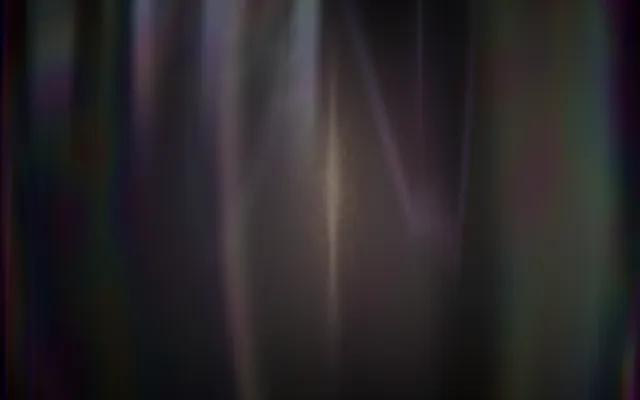
In Synfield's Veil, a few layers of iridescent silk hang in the dark. If you hold, the cloth is drawn towards you; when you let go, it rings through the layers behind and the waves bounce off the edges until they die away. Where you held and for how long change the waves, so the release is never quite the same twice. There is no correct pull and no record of the last one. People who stay often do the same thing over and over, and it would be odd to call that repetition wasted.
Acting, stopping, watching, leaving
A place that asks nothing of you has to make room for four things: acting, stopping, watching and leaving. The first is the one most interfaces are built for. The other three are harder to allow, because each looks, from the outside, like the visit going wrong.
Brian Eno wrote in the notes for Music for Airports that ambient music should accommodate many levels of listening attention without enforcing one in particular:
> It must be as ignorable as it is interesting. — Brian Eno, notes for Ambient 1: Music for Airports
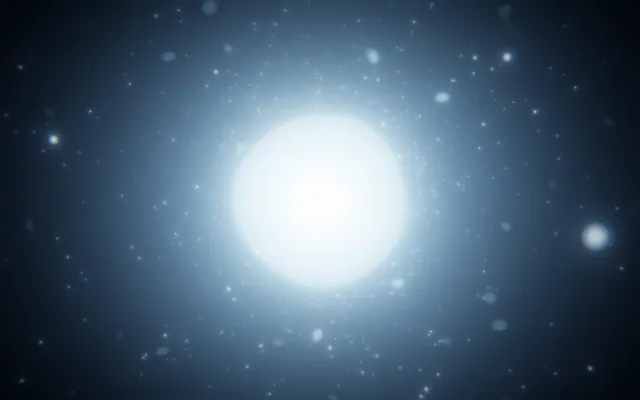
Something similar can be asked of an interactive work. It should answer when you act, keep going when you stop, be worth looking at when you only look, and let you leave at any moment without a warning that you will lose your progress. Synfield's Breathe is built around that kind of indifference. A single field of light widens for about four seconds, holds, and gathers back for about six, whether you follow it or not. If you open and close your hand along with it, the light warms a little; if you hold, the cycle pauses until you let go. It has its own pace, and it does not mind whether you keep it.
Many ways of paying attention
People attend to things differently. Some take in a scene all at once and move on; others stay with one detail until it opens up. Some want sound, others need it gone. Some return to the same small action for a long time because it is the interesting part.
Autistic writers have described this from the inside for years. In her 2011 essay Quiet Hands, Julia Bascom writes about the hand movements she was trained as a child to suppress, and about what they are for her:
> I think I understand the whole world when I rub my fingertips together. — Julia Bascom, Quiet Hands
Monotropism, a theory of autism developed by autistic people, initially Dinah Murray and Wenn Lawson, describes minds whose attention is pulled more strongly towards a smaller number of interests at a time. These are first-person accounts and a theory, not evidence that a particular website helps anyone, and nothing here claims that. Neurodivergent people are not one group with one set of preferences: plenty of them find bright, moving, sounding screens hard to be near, and for them the most important thing about such a place may be how easily it can be turned down or closed.
What these accounts do suggest is modest and practical. For some people, repetition, predictability, the chance to explore through the senses and control over what reaches them are not a lesser way of engaging but the preferred one. A work that has not decided in advance what correct attention looks like leaves room for more of these ways at once.
A small, older tradition
None of this is new. Interactive art has long made works that answer without scoring, and the guide to what interactive art is follows that history from kinetic sculpture to the browser. The web has its own branch of it: the net artists of the 1990s, whose story is told in Can a website be a work of art?, and the many small sites made since then because someone wanted them to exist. Neocities, founded in 2013, describes itself as a free place to make a personal website that "looks, sounds, and feels like you", and its directory is full of pages with no purpose a metric could recognise. Some of the playful toys and slow journeys gathered in interactive websites worth getting lost in belong here too.
Synfield is one small example among these. It is a set of worlds in the browser where light, matter and sound change with a mouse, a touch screen or, if you choose to turn on the camera, a hand. The camera video is processed in the browser and its frames are not recorded or sent to a server. It begins in silence, and sound comes only if you turn it on. There are no scores, levels or goals. Like most websites it counts visits, without cookies, as its privacy page explains; it simply never asks you for anything in return.
What it leaves you with
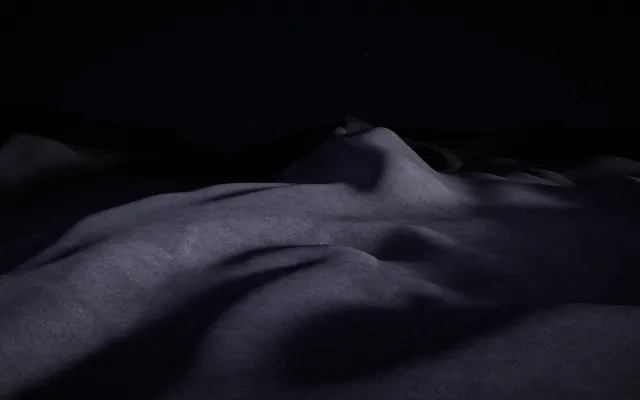
In Dune, you drag through dark dust and a low light picks out every furrow in shadow; hold still and the light turns, and the same marks look different again. The dust keeps the shape you leave for as long as the world is open. You can take a picture of it if you want, but nothing invites you to save it, and when you close the world, the furrows go with it.
That is the whole case for a website that asks nothing of you. It is not that such places are better for us than the useful ones, or that they make us calmer or more focused; there is no evidence for that, and they do not need it. It is that twenty gestures with nothing to show for them were still twenty things you did, noticed and felt, and that a few places on the web still treat that as enough.